

Learn about our solutions to improve the temperature and humidity of your greenhouse.


water heating
A system designed to improve greenhouse climate conditions by heating water with a boiler and transporting it via pipes from the boiler to the rail heating pipes inside the greenhouse.
Main functions:
- Maintain temperature within an optimal range.
- Improve the physiological development of plants.
- Prevent humidity-related diseases.
- Advantages:
- Uniform heat distribution.
- Greater energy efficiency.
- Compatibility with automated systems.
- Safety for plants and personnel.
- Precise temperature control.


indirect air heating (sleeves)
It is a system that consists of indirect heating equipment, heating the air by means of a combustion chamber where the heat exchange between combustion gases and clean air takes place. This allows the clean air to be sent directly to the plant and the exhaust gases out of the greenhouse.
Advantages:
- Improved indoor air quality.
- Uniform heat distribution.
- Greater safety.
- Precise temperature control.
- Fuel flexibility.


direct air heating
System consisting of fan units with an integrated gas burner.
The fan draws the internal air from the greenhouse and passes it through a burner to heat it and distribute it throughout the greenhouse.
Its purpose is to prevent the temperature inside the greenhouse from dropping to a level that would harm the crop, making it an emergency anti-frost system.
Advantages:
- High thermal efficiency.
- Immediate response.
- Relatively low initial cost.
- Fuel flexibility.
- Simple installation and operation.


Evaporative Cooling Pad System
A evaporative cooling pad is a key component in evaporative cooling systems used in greenhouses, especially in hot climates.
- The wall is composed of a cellulose or plastic pad (generally corrugated cellulose treated with antibacterial products and resins) that easily absorbs water.
- A pumping system recirculates water from a reservoir to the top of the wall, where it is evenly distributed over the pad, keeping it constantly wet.
- On the opposite side of the greenhouse, exhaust fans are placed to draw air from outside, forcing it to pass through the wet pad.
- As it passes through the wet pad, the hot outside air loses temperature because part of the water in the pad evaporates, absorbing heat from the air.
- The cooled air circulates inside the greenhouse, helping to reduce the temperature.


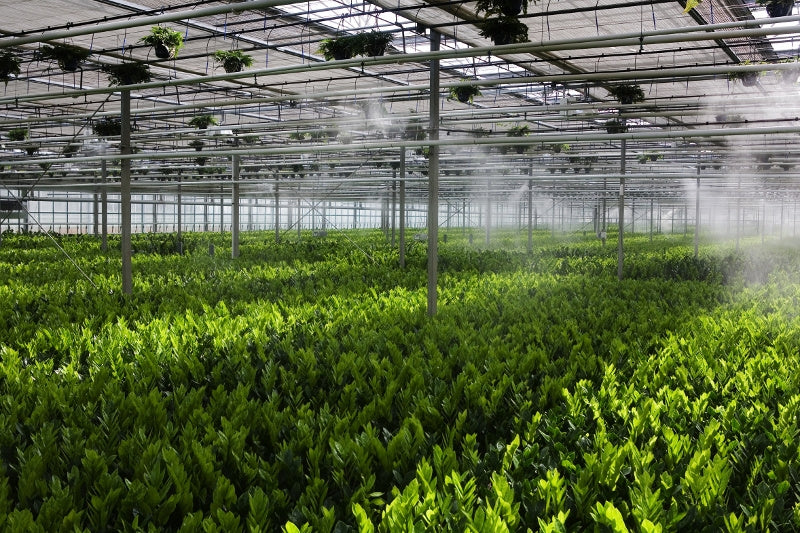
fog system
Misting system that seeks to increase humidity and decrease temperature inside the greenhouse in order to control these parameters when required.
Its main function is to increase humidity (up to 99%).
Advantages:
- Temperature control.
- Increased relative humidity.
- Reduced plant stress.
- Uniform water distribution.
- Compatibility with foliar fertigation.

recirculators
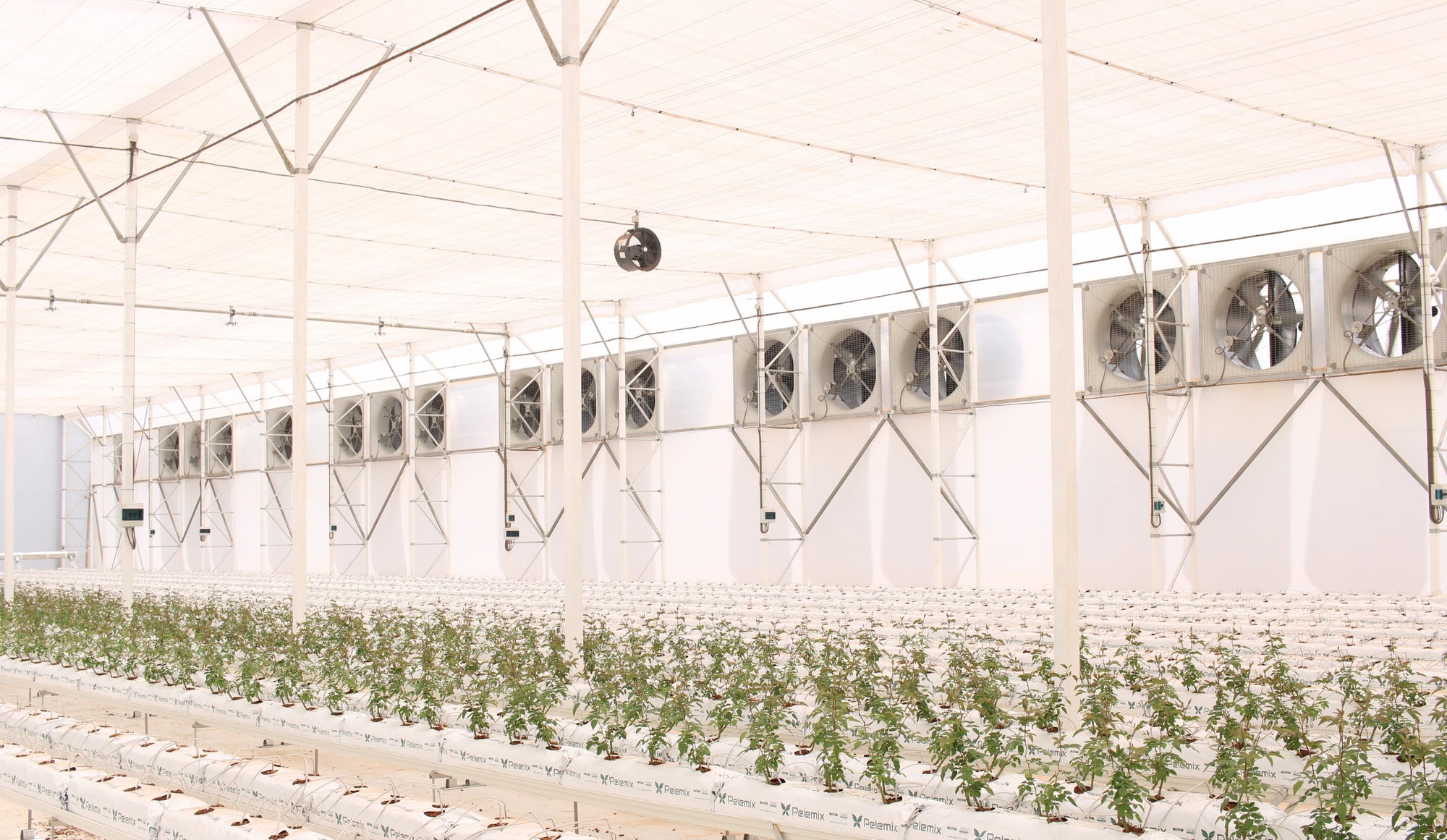
It is a system that consists of fan equipment, in order to move the air inside the greenhouse, homogenizing climate conditions.
One of its functions is to equalize climate conditions throughout the greenhouse, by recirculating the air, preventing humidity from stagnating and causing diseases.
Advantages:
- Improved thermal uniformity.
- Reduced air stratification.
- Better humidity control.
- Optimized use of heating or cooling.
- Stimulates natural ventilation and plant transpiration.


Range Hoods
A forced ventilation system in a greenhouse works by using electric fans that extract hot, humid air from the inside, creating a depressurization (negative pressure) that draws fresh air from the outside through specific inlets.
This process regulates temperature, humidity, and CO₂ concentration, improving the environment for crop development.
Advantages:
- Temperature control.
- Improved air circulation.
- Reduction of excessive humidity.
- Supply of fresh CO₂.
- Optimization of the microclimate for delicate crops.

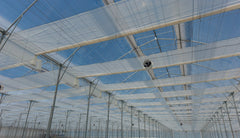
Climate Screens and Energy Curtains
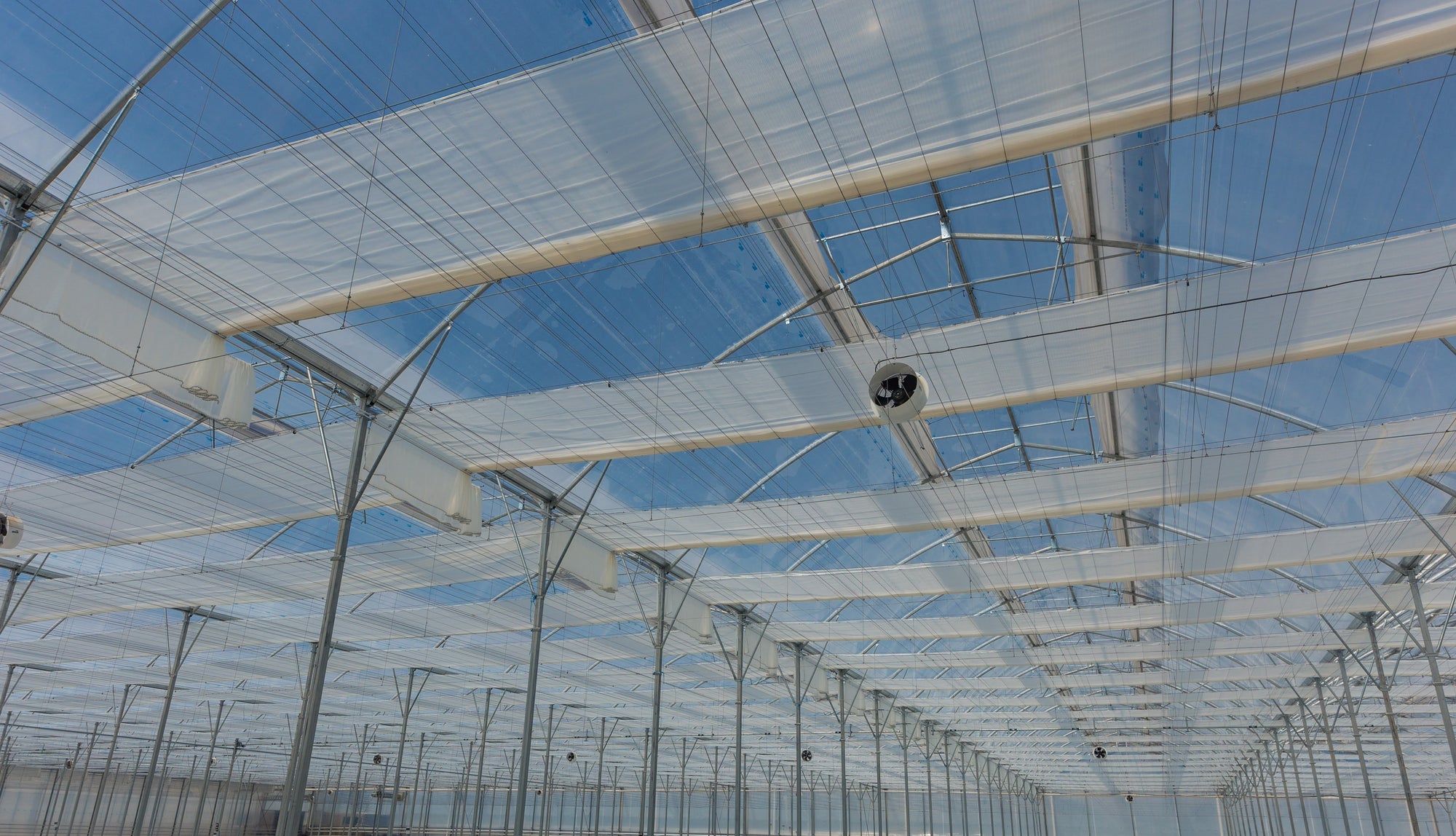
Climate screens in greenhouses are movable fabric or mesh structures used to modify the internal microclimate by regulating solar radiation, temperature, humidity, and heat loss. They are key in efficient climate management, especially for high-value crops.
Operation:
They are generally placed in the upper internal part of the greenhouse (above the crops or below the temperature) and function according to their type and time of use:
- During the day – Sun protection.
- During the night – Thermal conservation.
- Humidity and airflow control.
Types of screens:
- Diffuse: reduces excessive light and heat.
- Thermal: Retains heat at night.
- Dual system: Combines the benefits of both screens (thermal and diffuse) for optimal climate control and maximum energy savings.

stay in touch with us
- ecommerce@invermex.com
-
6675 42 30 04
-
Alejandro Camacho, No. 4010-A Sur, Ejido de las Flores, Campo el Diez, Culiacán, Sinaloa, Mexico
-
Monday — Saturday - 8 am — 6 pm